Formula E faces one of the toughest challenges for its first Gen4 calendar, involving a country considered a ‘must run’ next year.
Japan has long been considered the land of the ‘sacred race’ for Formula E racing, and, after securing a place in 2024 with the first Tokyo E-Prix, its importance in the world championship of all electricity is now in a relatively protected position to those who enter and business partners.
In addition to Nissan and Lola’s technical partner Yamaha being the two biggest manufacturers involved in Formula E, multinational connections with bases and heritage in Japan are waiting for news on whether they will also get a local race.
Bridgestone, which will be the supplier of Gen4 tires and the electronics company TDK, a key partner of Porsche, will be prominent in Gen4 as parts of the core sports, technical and business environment. That means more pressure is applied to have a Japanese race.
However there are doubts that one can continue, although now everything is being done to try to make sure that Japan remains on the agenda for 2027, the first year of the Gen4 era.
Questions surround the suitability of the current Big Sight track – around the convention center of the same name, in the Ariake district of Tokyo – for high-speed cars, and the business model of the race, which is known to lose a lot of money.
It will hold its fourth and fifth Formula E races this July under lights but if they are not to be switched off completely for 2027, a new agreement between Formula E and the Tokyo Metropolitan Government is needed.
TMG, of course, contributes to the cost of the race, but most of it remains with Formula E. The famous Japanese advertising and entertainment company Dentsu leads the production of advertising revenue.
Others close to the Japanese race suggest that it costs somewhere in the region of €20-22million, but a small part of that is returned to the business. This means that the Formula E is continuing that race, and is willing to cut back or have a partner who will accept the big costs.
The fact that a new agreement with TMG is required for 2027 means that there is a lot of discussion and negotiation going on right now, in the hope that the city’s track/show center will remain available for Gen4.
Little fear at the moment of whether Tokyo will be on the 2026-2027 schedule is evident in the paddock with Nissan team principal Tommaso Volpe telling The Race last month: “Needless to say, it could be very bad. [not to race in Japan] because we are the only brand of Japanese cars and I believe that they will not be good for the championship in general.
“I don’t think that other brands are happy not to race in Japan, which is an important market for cars and car manufacturers, so I’m sure they’re trying to find a solution, and I think that for competition it’s important to have a race in Japan.
“We also know that Formula E is always a bit complicated to get deals, especially with the inner-city races. Let’s say we are staying positive until the final calendar is confirmed.”
So, what are Formula E’s options for continuing to race in Japan during Gen4?
Option 1: Stay in Tokyo
It is clear that finding another sale in the Big Sight area of the largest city in the world is a popular and desirable option. Now, in the third year of the race’s existence, Formula E can’t afford a decade of work to ensure that the event in the capital of Japan happens to be ruined.
Formula E also clearly delineates between Big Sight and the London ExCeL track when it comes to qualifying for Gen4 races. The tracks are similar in size and width, but ExCeL has solid first and third sections. These are next to impossible to redesign, while Big Sight has more room for adjustments.
If Formula E gets a new deal in Tokyo’s Ariake district, the current 1.6-mile track may have to be repaired elsewhere, such is its rough nature. But Formula E chief operating officer Alberto Longo isn’t sure it will have to be like that, saying: “This is what we’re trying at the moment: to change it, to expand it a bit, and to expand certain areas.
“But in any case, the comparison tells us that it is suitable, so even if we don’t change it, we should be running there.
“I have said many times that the ExCeL site is not suitable for the Gen4 era.
“Tokyo, I can’t believe it [that it will be unsuitable]. We’re working on it, and hopefully we’ll be there.”
Form E has been working very well with Tokyo authorities, including coordinating and promoting Tokyo governor Yuriko Koike’s goal of reducing emissions from the capital. Tokyo’s Zero Emission Plan has seen the government target zero carbon dioxide emissions by 2050.
Porsche partner TDK is also involved in the 2026 July race and has recently become the main partner in the race, which will be held under lights on the evening of July 25/26.
Option 2: Order
Sportsland Sugo, north of Fukushima in Miyagi Prefecture, may be a four-hour drive from Tokyo but may be an option for Formula E if it’s not possible to do business in the capital.
The circuit – which is owned by Yamaha – has been a home favourite, hosting Formula Nippon/Super Formula races since 1987, and is known for its white corners and lack of modern wide racing surfaces.
After the Jarama race last month, this would be the Japanese equivalent, although its countryside would be very different from anything Formula E has raced before, even though it is only 30 minutes from the city of Sendai, Japan’s 12th largest city by population.
Race understands that Sugo has been in recent preliminary discussions with Formula E, although these are still early and informal, and the agency has a major option as long as the Big Sight site does not get a new agreement for Gen4.
Option 3: Fuji
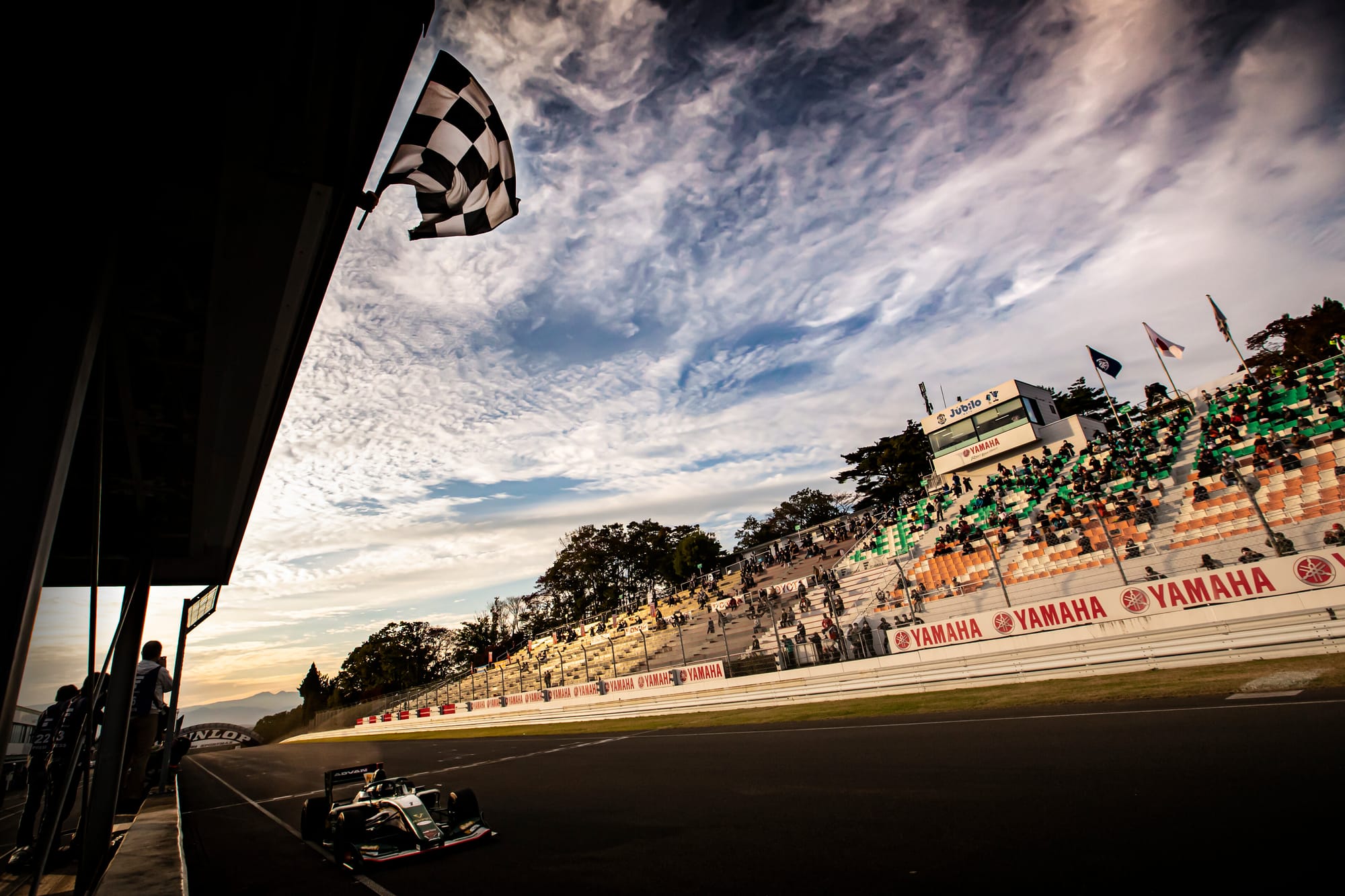
Also said to have shown interest in Formula E recently is the famous Fuji Speedway circuit, one of Japan’s most famous racetracks that has hosted the top domestic races – Super Formula E and Super GT – for decades.
While Formula E is initially difficult to imagine on the uneven 2.8-mile track in Shizuoka Prefecture, the opportunity to showcase the Gen4 car’s speed and top speed in excess of 200mph along a nearly mile-long track could be attractive for the all-electric world championship.
If that happens, a temporary chicane may need to be built to end the run to the first corner.
Fuji Speedway is owned by Toyota, which is a sponsor and technical partner of Yamaha, which itself in addition to having Sugo has tests near Shizuoka known as the Fukuroi test site and the recently completed Kikugawa test center.
#solutions #important #issue #Formula #Gen4 #calendar