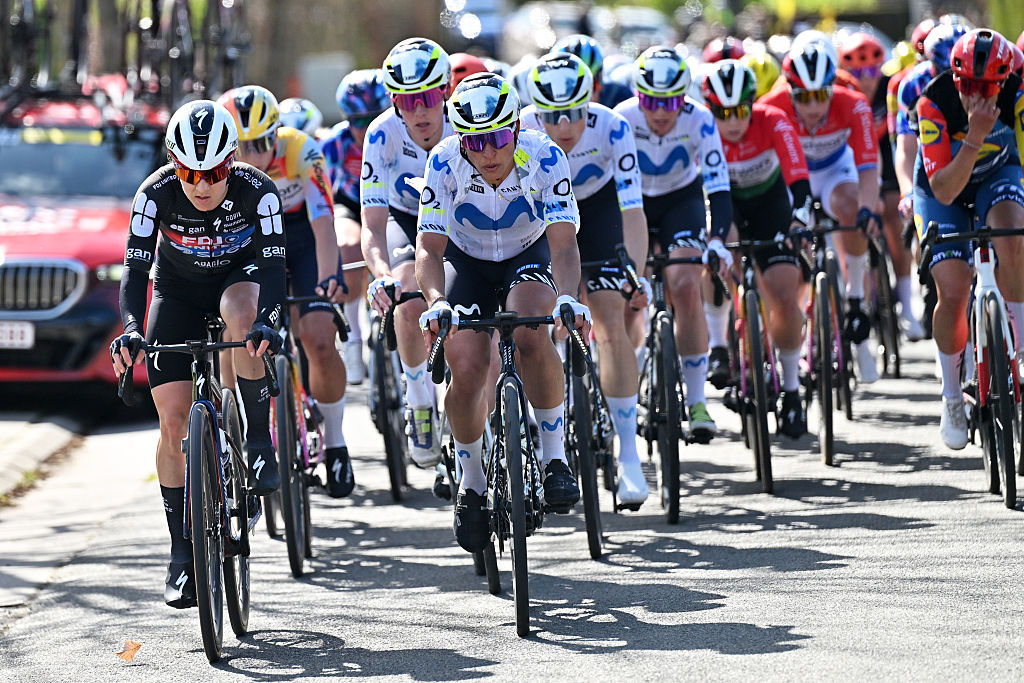
I’m 19 years old, I’m starting my second year as a professional, and I just ran my second Tour of Flanders, a race that, for me, is 100% the hardest race I’ve ever done and that’s on the calendar because of its history in cycling, how the women’s race has evolved into what it is today, and the fact that it’s become such an important team for us, and I our important director at Movistar. one day’s pace in the calendar.
Because of that, everyone wants to be the best, and for me, it was a cruel, cruel race. It was difficult at a time when people watching TV did not realize how difficult it was, that the areas that are not obvious: the flat roads with corners, the climbing style, and the position of the peloton. It’s out of this world, and it’s hard to explain how much concentration and physical strength is involved. In a race like Flanders, it’s always standing followed by climbing. The climb is short, but that only makes it very difficult because you get more climbs, and if the situation was good, that’s great, you are in front of the group, but then the next climb will come. So you can’t win, rest.
Flanders Classics is doing well
Outside of my personal involvement, Movistar has a strong history in racing, with Annemiek van Vleuten, who has spoken extensively about the Monuments and the Tour of Flanders and commented on the development of women’s cycling over the years. And now I am in the same class with him, I am very young and I have very few hands, but I also talk about the same topics, which are emphasized in Flanders; everyone is doing as well as they can, but it’s also a time when we’re more aware of how women’s cycling has progressed.
The pace and intensity of the field has improved, even compared to last year. I don’t know if we broke the statistical record, but the level was very high yesterday. It plays a role in increasing the number of spectators of the women’s Tour of Flanders. In my eyes, the situation is getting better, and more people are paying attention to us. Both things go hand in hand; they help each other and help each other. Nowhere is it perfect; there are still many things we want to improve, but for example, now we have the same prize money in the Tour of Flanders. It’s not the most important thing about equality and sports, but it’s definitely a big thing, and something we can talk about and be very proud of; that is now an issue in one of the biggest races in women’s cycling.
‘Going up to Kwaremont, I honestly couldn’t even imagine how much my legs hurt because it’s so loud’
Having races on the same day is a fun topic to talk about again, and many people have different opinions. Some people think it’s good for our women’s race, because fans will stay to watch our race, but some people also think it’s better to have them on separate days, so that the women’s race doesn’t feel like something unexpected.
When Paris-Roubaix was held over two days, many people did it over the weekend, rather than leaving after the men’s race. But, as someone who ran the Flanders race yesterday, I noticed that not many people left after the men’s race. Many people were on the roads supporting us. The Flanders Classics method of having two races in one day works because of the design of the course and the fact that the people of Kwaremont, when they arrive and live there, are not allowed to leave until the races are over because there is no way out except for the road used by the cyclists.
In that sense, as someone who has never done the Tour de France, the crowds in Flanders were the biggest I’ve ever seen. When I went up to Kwaremont, I honestly couldn’t even imagine how much my legs hurt because it’s so loud. There’s a lot to focus on on the ride, and the fans were even leaning on the barriers holding the beer – as it was a supply station – obviously they thought it was just what we needed at the time.
It was a very strong race. While I was in the 5th heartbeat zone, I was also appreciating the support, and it felt very powerful. It’s a small rider, so someone a little older can compare it to Flanders five years ago; less crowds, more crowds, but for me, as a 19-year-old, I don’t know any different. I’m still very aware that this is not the usual type of women’s peloton, and that I’m lucky because I’m running this race, and it’s the best type of this race they’ve ever had.
So Flanders Classics’ plan to improve the visibility of its women’s races by running them on the same day and having the women’s races finish after the men’s races has been a huge success. As women, we must use men’s races to grow. The world of men’s cycling has developed a lot, and what Flanders Classics has done by connecting us to that, at least initially, to accelerate the growth of women’s racing at the beginning, in my eyes, is the best way a race organizer can help.
However, eventually the women’s race will pass that trend – I think it will – and Flanders Classics can come back and say that they really have to separate these two races because they can make double money by putting the women’s race on Saturday and the men’s race on Sunday.
What they’ve done so far is great, and it’s perfect for where we are now. However, I hope that in the future it can grow and that they will have to reassess their strategy because it worked and we have the growth that we needed, strengthened from the men’s races, and we have built our own unique brand, and also, the fan base. Thanks to Flanders Classics.
You can also see what their modern tribal organization is like through social media. I follow them on Instagram because their content is fun, different and trendy. You see more of the players’ personalities, which contributes to increased followers and engagement. Showing the personal side of riders and making cycling fun and interesting getting on and off the bike are great ways to make the sport more attractive.

‘There’s something to be gained from watching more women’s racing channels’
And that brings me to another aspect of racing: reporting. This year, around 100km of the women’s race was filmed. The men covered about 280 kilometers of the race, and I remember watching the men’s race before we started running yesterday on the bus going there. Almost all of their races are televised, and obviously 280km compared to our 160km. I would argue that our race, from start to finish, is a bit more engaging and fun because it’s shorter: we get to the finish line faster, and there’s less time before the race starts. So, there is something to be gained there by watching many women’s racing channels. We have to keep pushing for that, but the spectators and the cycling community as a whole need to do the same.
I think it would help women’s cycling in general; all sponsors and partners who contributed money, but it would benefit the race, and make the race even more exciting for the people who are starting to split knowing that if they take a break from zero kilometers, then they get a lot of television time. Finally, this is where the biggest gap in women’s cycling is: the smaller teams need more partners and sponsors to close the gap with the top level, while in men’s cycling, there is very little difference.
Thanks
After my second experience running the Tour of Flanders, I would like to thank all the people associated with this race; the riders for raising the bar and making everyone want to be the best versions of themselves; race managers, teams and sponsors who support teams and races; all the people who came to watch, be in the VIP tent, or just stand on the side of the road cheering us on.
I thank every race, because this sport is a privilege regardless of the day of the week, the place, or whether you run the Tour of Flanders or not. These elements combine to make it the most unique race on the calendar and shape how women’s cycling is seen at the highest level. It is the most important speed to have everything at 100%.
So, although my race, personally, and from Movistar, was a disappointment, and we were not satisfied at all, I was still riding the last 40km in the group, I was thinking about the luck I have to be 19 in this race, I was riding with girls around me who I believe contributed a lot to the sport so that I could not be close to them in their group riders Mocyclo women my age without playing Mocyclo women my age. Which is a good idea to wrap your head around like a competitor while you both appreciate the state of women’s cycling while in that moment, at the Tour of Flanders, you wish your legs didn’t have to be taken out to the same level as they are.
A huge thank you to all the women in that race that ultimately got me there and contributed to how women’s cycling has grown into what it is today.
#Cat #Fergusons #Spring #Classics #column #Tour #Flanders #biggest #intense #race #calendar #felt #pedal