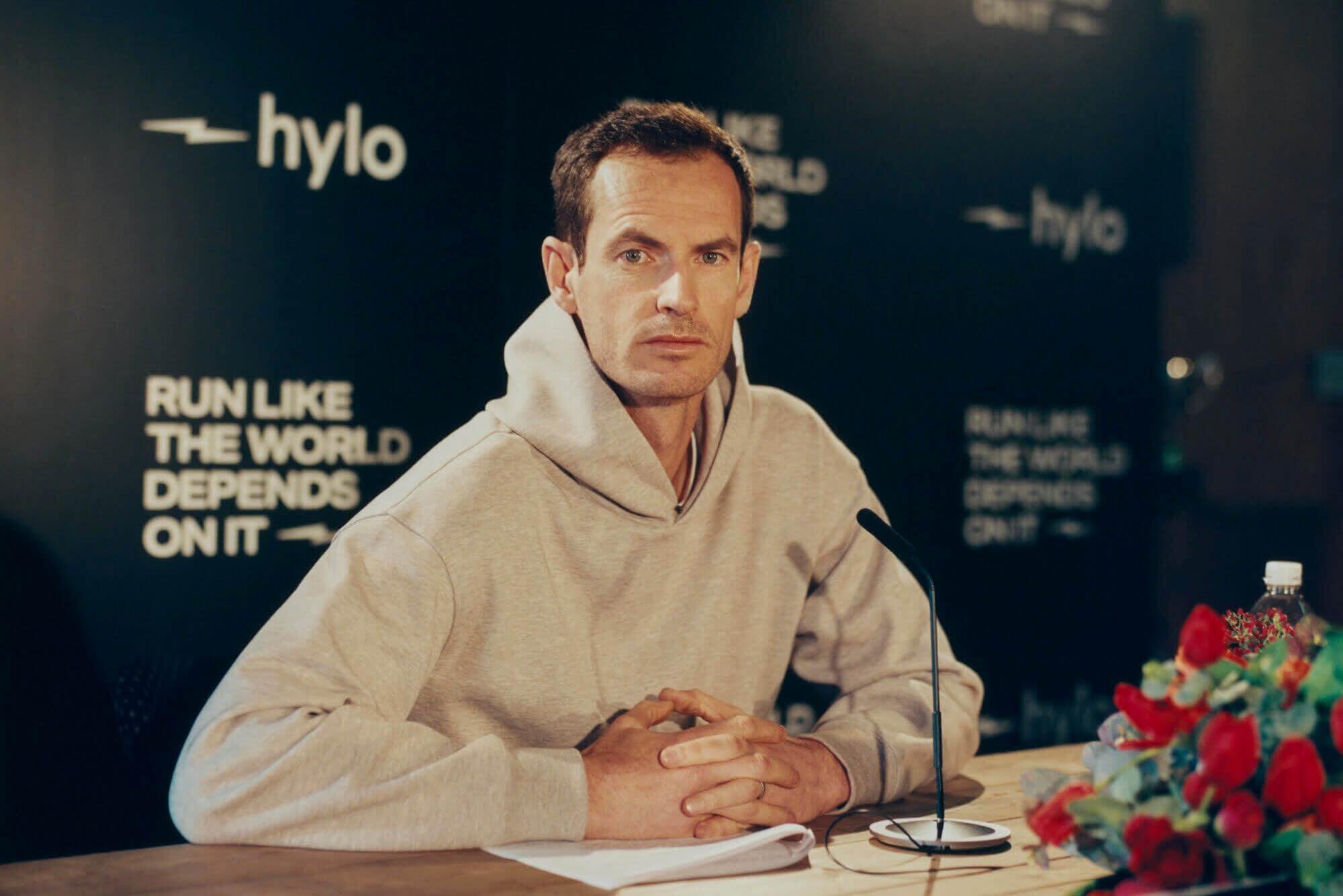
When Andy Murray weighed his latest investment, he left nothing to chance.
After regular meetings with executives at Hylo, a performance-focused running shoe brand, Murray did a different kind of due diligence: He tried the shoes himself. He then asked his wife, Kim, and his fellow runners to do the same. Then he went to the local shops, asking the owners if people were still buying shoes and what they thought about them.
Satisfied with his research into the DIY market, Murray made a significant investment – neither he nor Hylo would confirm its size – which was announced on Wednesday in a deadpan press release and a video matching the personality of tennis players who knew it during his court career.
“This is not about him,” the news release said.
“It is clear that this partnership has nothing to do with Andy’s desire to reunite with his former partner and restore the success he had in the management industry.”
That sparring partner is Roger Federer, a 20-time Grand Slam champion and an investor in On, a shoe brand that includes tennis shoes and clothing. In 2019, Federer invested $50 million for a three percent stake. Six years later, after the launch of the tennis shoe called Roger, Federer’s fortune was worth 375 million dollars and a key driver to become the seventh billionaire athlete, as estimated by Forbes.
Whether they start getting involved while playing, or wait until after retirement, tennis stars continue to turn to the world of investing as a vehicle for their lives during tennis and beyond. During their careers, they are investments, for equipment and clothing sponsors, products that seek endorsements, and even parties that pay appearance fees. Building those jobs also requires significant investment, either from the family or other people who want their profits.
For players like Murray, Federer, Serena Williams, Maria Sharapova and Andy Roddick, getting off the court means putting their minds to a different kind of thinking, and finding similarities between the skills they used to win Grand Slam titles and what they need to make decisions about how to invest their career earnings and why.
“Investing was something I did while I was playing,” Murray, who became a partner in Redrice’s business venture in May of last year, said in a video interview a few weeks ago.
“But I’m more interested now since I graduated because I have more time and I can contribute more.”
Murray, 38, has invested independently in more than 40 companies. He made many of his investments before retiring from tennis in the summer of 2024, and before joining Redrice.
During his career he reached world No. 1, and won three Grand Slam medals and two Olympic golds, his most important came in 2019. He took an equity stake in the clothing brand Casttore, along with an endorsement deal, before launching the AMC clothing collaboration line. At the time, Castore was a four-year-old company that was not profitable. It currently has an estimated net worth of $1.3 billion, and Murray’s net worth is approximately $110 million.
Murray’s investment in Hylo follows a different pattern, because Redrice was part of the first investment of 3.1 million in 2022. But whenever he and other stars have invested, the same conversation has been applying lessons from their sports life to their finances. Decades of psychologically testing opponents gives one a sense of how potential mates might react — and whether or not they’ll be a match.
“You can have a great idea, but if the people running the business aren’t good people, it’s likely to fail,” Murray said. In a recent phone interview, Tom March, founder of Redrice, compared Murray’s attention to detail to Hylo’s capabilities and how to select and adjust racket specs and tension.
Some stars who have moved into the financial world agree with these types of comparisons, based on the knowledge that sports careers are short and that their lives extend beyond what they have achieved on the tennis court. Business offers financial opportunity and a sense of purpose beyond sport – as well as the opportunity to be part of a team. Players often talk about chasing the adrenaline rush they had while playing, which can lead them to things like poker, which are very high risk, or something completely different.
Roddick, who has amassed a small fortune from a real estate company, described his investment as “the most boring business you’ve ever heard of” during a 2024 interview.
“I knew very well that it would end one day. I didn’t know how, I didn’t know how, but I always had the feeling that I wanted to have the strongest foundation to build something,” Maria Sharapova, who started the defunct candy brand, Sugarpova during her career and has been an angel investor since then, said during an interview with Roddick’s podcast, Work.
Serena Williams, who founded Serena Ventures in 2017, in 2024 told the New York Times that “she had to make quick decisions under pressure, and in business I found that confidence, despite uncertainty, is important.”
Murray showed considerable strength in tennis, but not in business. The player is tasked with being the boss – often long before they are ready.
“It’s something I really struggled with in my career — especially early on,” Murray said.
“The energy of a young person who has to lead the team… It’s an amazing thing in tennis and you don’t have the skills to do that when you’re young. You learn a little bit as your career goes on but it’s difficult.”
Andre Agassi, who has invested heavily in areas such as education and pickleball, said in a recent telephone interview that “the big meeting will be its problem solving problem.
We have to solve problems when we are out there, and often we have to do it alone.
“I can definitely relate to the problem-solving side because most businesses take time,” Murray said.
You have to learn from mistakes and always want to improve. And as an athlete you finish your whole career, the best do that.
Andy Murray has added Hylo shoes to his biggest investment. (Courtesy of Hylo)
Murray has yet to speak to Federer about their rivalry dispute, but the pair recently played golf together in Dubai while on a family holiday. Murray said he probably won that day, before saying that he “doesn’t play six hours a day like me. He has a lot more going on in his life than I do.”
Murray, Federer and their two main rivals, Rafael Nadal and Novak Djokovic, have all entered the world of investment since retiring – or in Djokovic’s case, playing. Nadal has invested heavily in hospitality and education, while Djokovic, whom Murray coached for six months until last May, has focused more on health and wellness projects.
But investments and other methods of it, such as a member of the board of companies, are still important to be an expert or a coach of many stars entering their careers. Murray, who spends much of his retired life working as a taxi driver or playing golf and does most of his investment work from his home in Surrey on Tuesdays, when his club is closed, is always surprised but cautious in both ways.
“I think at some point I might (think about returning to training),” said Murray, who was part of Djokovic’s team at the start of last season, including the Australian Open. He has had opportunities since then, but since he didn’t want to become a coach once he finished playing, he received an offer too good to refuse from the 24-time Grand Slam champion and put off a break from the sport he had always wanted.
“My priorities are elsewhere now, but I will do it again in the future,” he said.
“I like the idea of helping a young player a lot, like – not that I would expect it to be like this – the (Juan Carlos) Ferrero-(Carlos) Alcaraz relationship. A young player that you can really help and have a positive impact on. I would find something like that interesting but not now.”
Murray’s awareness extends to analysis and television work.
He said: “My opinion is that punditry in general, especially when you have a name in the game, is very easy.
“There are people who excel at it.” Jim Courier and Andy Roddick were great at the game, but they also loved the game and were well-researched, well-spoken, very passionate. And they do the job very well. They don’t just show up because they’re getting paid and just throw out their opinions, not really looking at the players and not thinking too much about what they’re saying.
“So it can be done very well, but I don’t think that’s always the case.” And I think tennis needs to improve the way they play, but it’s not something I’m willing to do right now. I wouldn’t mind doing it in the future, but I don’t want to do it now.
Murray is still following the game, but hasn’t hit a tennis ball in nine months after breaking up with Djokovic. He did it again a few weeks ago for a promotional game, testing rackets from different eras of tennis. “I hadn’t completely lost it, which is a good thing,” he said softly, before returning to the relationship between the sport that defined his first career and the business that, at least for now, defines his second.
“I think it’s a journey to see a company grow and develop, to support a company in the beginning and to see it become something good or great,” he said.
It is not a specific issue. Not every investment you make is successful.
#tennis #stars #Andy #Murray #turn #investing #careers