No. 1 Club
Agassi’s ‘History’ returns to No. 1 in 2003, through Melzer’s eyes.
Melzer, who fell to Agassi in the Houston SF qualifier, is speaking exclusively to ATPtour.com
01 April 2026
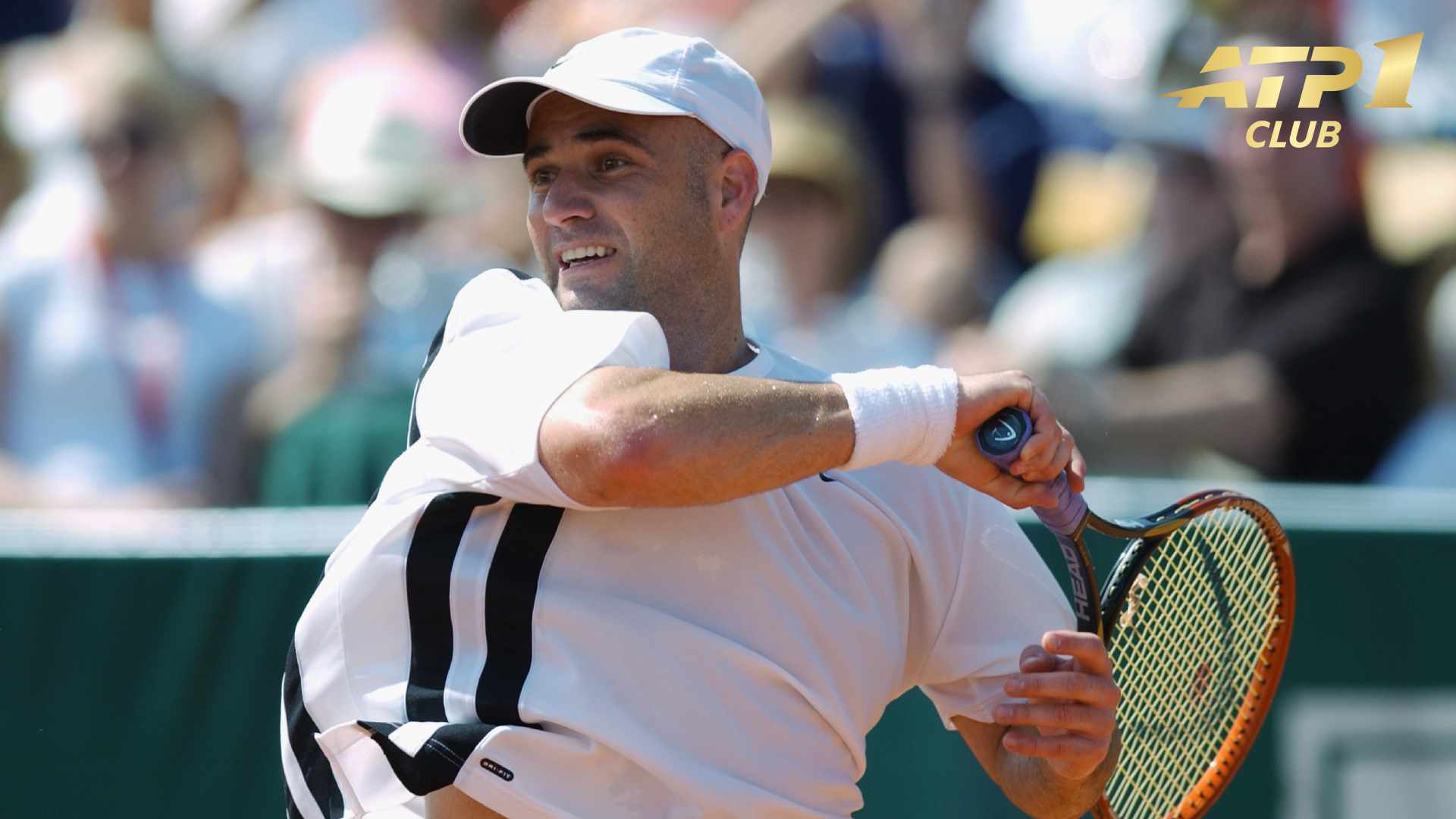
Matthew Stockman/Getty Images
At the age of 33, Andre Agassi became the oldest World No.
Written by Jerome Coombe
At the age of 33, Andre Agassi produced an outstanding run in Houston in 2003 to secure yet another career victory.
With his 6-4, 6-1 semi-final win over 21-year-old Jurgen Melzer at Fayez Sarofim & Co. At the US Men’s Clay Court Championship, Agassi regained the World No. 1 ranking and became, at the time, the oldest player in history to stay on top of the PIF ATP rankings. While Agassi added another inspiring chapter to his career, this moment also left a mark on Melzer, who entered directly into the history of tennis as it happened in real time.
“Going into that match, I knew what he was playing,” Melzer told ATPtour.com, reflecting on their clash in 2003. So, if he beat me, he would be the biggest No. 1 at that time. There was talk in the dressing room. It was discussed in press conferences before.
So when we shook hands after the game, I complimented him on being the No. 1 senior. 1 said to him, ‘If anyone were to lose the game, I’m glad it’s me.’ Because I was a part of history at that time.”
However, what defined the week went beyond the most important event. Agassi’s position remained unshakable even on clay, which is one of the places that can be considered as one of his young nature. From the first interview, Melzer encountered a tempo that destroyed the time of preparation, forcing him to react immediately and leave a small margin for change against one of the most pure football attackers of his time.
“Playing someone like Andre, if you’ve never played him before, the first time you play him and you start warming up to him, he’s ripping balls,” Melzer said. “I knew going into the games against him after that I had to warm up close to the game because you’re not going to find any rhythm.
“He’s going to rocket you from where you’re going. It was his thing, the way he warmed up and it was scary, but I learned my lessons the next two times.”
For a young player emerging on Tour, the experience quickly became a lesson in the demands of facing a No. 1 player. 1. Agassi had won his eighth and final title of the season at the Australian Open, cementing his status among the elite, while Melzer was beginning to make his mark on the ATP Tour.
Although the Austrian had won a dominant victory against World No. 2 Tommy Haas in Vienna last year and showed early resistance in Houston, the match ended up highlighting the difference Agassi had with timing, anticipation and constant baseline pressure once he had established his rhythm.
“After I won the quarter-final, the game was happening… You used to dream when you were a kid playing against someone like that, and at the same time, you start to get scared because of the name you are playing,” Melzer thought. “To face someone like him is very special.
“I was 21 years old back then. It was an amazing experience on the one hand, and on the other hand, when you get a** kick, it’s not so fun! If a 33-year-old is about to get No. 1, age doesn’t matter. He was at the top of his game, so I didn’t think age would matter in that game.”

That first lesson would prove beneficial for Melzer, who used the experience as a reference for seasons to come. As his game matured and his confidence grew, the Austrian began to translate those points into results, eventually turning the matchup in his favor against one of the game’s greats.
Melzer went on to defeat Agassi in one of their next two meetings, in Toronto in 2004 and in San Jose in 2005, finishing his career with a 2-1 Lexus ATP Head2Head record against the American. Those wins were part of a steady rise, where he would reach a career high of No. 8 in the PIF ATP Rankings in 2011.
“Both of those games were some of my best all year at that point,” Melzer said. “I felt comfortable. I was not rushed by his speed. I had a clear game plan and it worked twice. You have to have a good day to complete it, but luckily I did.
“He had the same feeling in those games, but I wasn’t as nervous anymore… And I’m one of the few who can say they have a good head against him. I’m still proud of that. It’s a long time ago, but it’s a very good memory.”
However, as normalization lessened the element of terror, the memory of the incident that surrounded Agassi did not completely disappear. For Melzer, the meeting in Houston remained special, not only based on the stakes, but the personal significance of facing the player he had grown up watching during his growing years in Austria.
“With Andre, it was different because he was a childhood hero,” Melzer said. “When I was growing up playing tennis, he was a big star and an idol. The whole atmosphere around him when he’s competing is very special. That’s what makes it special to play against him.”
Agassi’s return to No. 1 in Houston was also a strong indication of his long life above the sport. As he was starting to climb to World No. 1 in 1995, the American completed a full ring season eight years later by achieving the top spot in 2003, becoming the oldest player to do so at the time.
By the end of his career, Agassi had spent 101 weeks at No. 1, which is proof that he was not only at his peak, but also his ability to evolve and stay among the elite of the sport throughout the different eras – signs of the true No. 1 Club.
For Melzer, it was a week that provided a glimpse into that state and place within its history. It was an experience that highlighted just how high the bar remains for those reaching, and returning to, World No.
#Andre #Agassis #historic #return #eyes #Jurgen #Melzer #ATP #Tour #Tennis