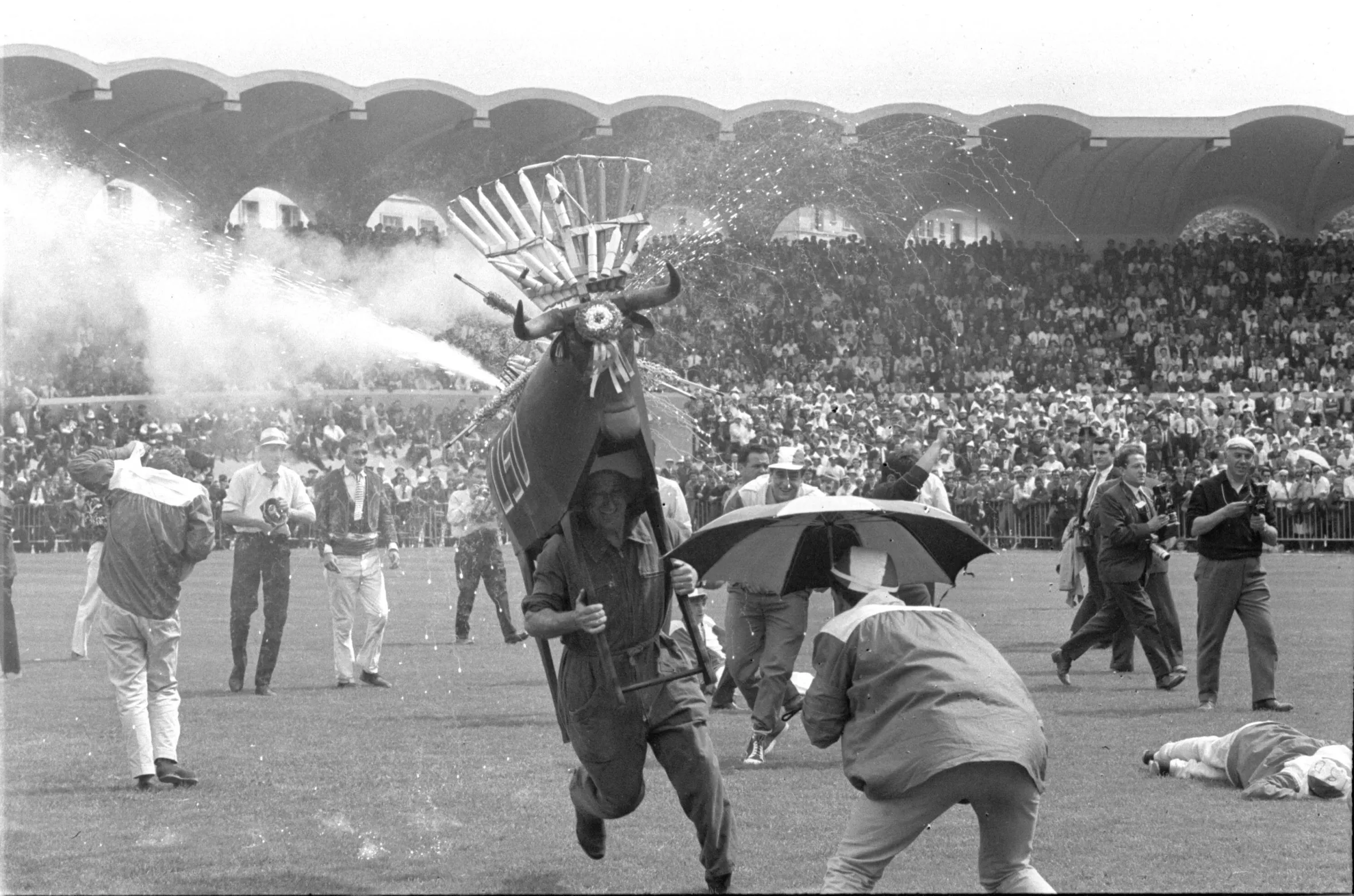
Raymond Poulidor was the French symbol of great failure. “Poupou” passed the “Eternal Second”, the favorite three times in the Tour de France after Jacques Anquetil, Felice Gimondi and Eddy Merckx.
For a while, Clermont Auvergne was them A rugby player. In 2010, they prepared for their 11th final – and they have seen many times – in order to become champions of France. They had lost all ten. For L’Équipe, Olivier Margot created this event with good references to the Puy de Dôme, where Poulidor and Anquetil led the Auvergnat battle during the 1964 Tour de France; Vercingetorix, the Gallic king who led a failed rebellion against the Romans; and Anton Chekhov’s views on the forgotten present.
Clermont, in the end, won. Bouclier de Brennus was theirs. It didn’t matter that they lost the final again in 2015 and 2019, because they won in 2010 (and in 2017). They changed from Poulidor to Joop Zoetemelk: the Dutchman who finished second in the Tour six times, Poupou’s heartbreak twice, but won in 1980.
Post-Clermont, Dax dominate A rugby player. Five finals, five defeats. At 15 out of 16 Pro D2 teams, it seems that they will never win again. Today’s forces are against cities like this, even though their popularity is great. Jean-Louis Aragon wrote in Le Monde in 2007: “No one in Dax dares to say it, or perhaps even think it,” but Dax, a town with 20,000 inhabitants, loves French rugby what the Perpignan train station was to Salvador Dalí: the center of the world.
The loss of points for financial violations hindered Dax, however they should wait as it is only a good victory after the tenth. The players threatened to strike in December before the trip to Grenoble. On Friday Dacquois hosted Grenoble at Stade Maurice Boyau and won 50-26. This section was on holiday for the riders as part of a crowd of 4,648, who heard the bullhorns marking the half-time and full-time whistles.
Dax is in hot water. Fortunately, that comes naturally to them. The spa town is famous for the Fontaine Chaude at its heart which produces water at 64C. In the period of ten minutes of walking in the spring is the bull and the stadium, in the center of the red and white Feria, the famous festival of August.
We see in Dax’s rugby history all the heartbreak sports can offer. Lourdes, at the throes of their heyday, were the first to beat them in 1956. Béziers won in 1961, thanks to Pierre Danos’ superb goal. Agen won by one point in a fierce final in 1966 and Tarbes won 18-12 in 1973. The most famous, worst loss was in 1963 at the hands of Mont-de-Marsan. That was the last game of Landes, a rare display of departments, and only Bouclier of Montois. The next Landes derby, for teams separated by one point in Pro D2, will be on April 17.
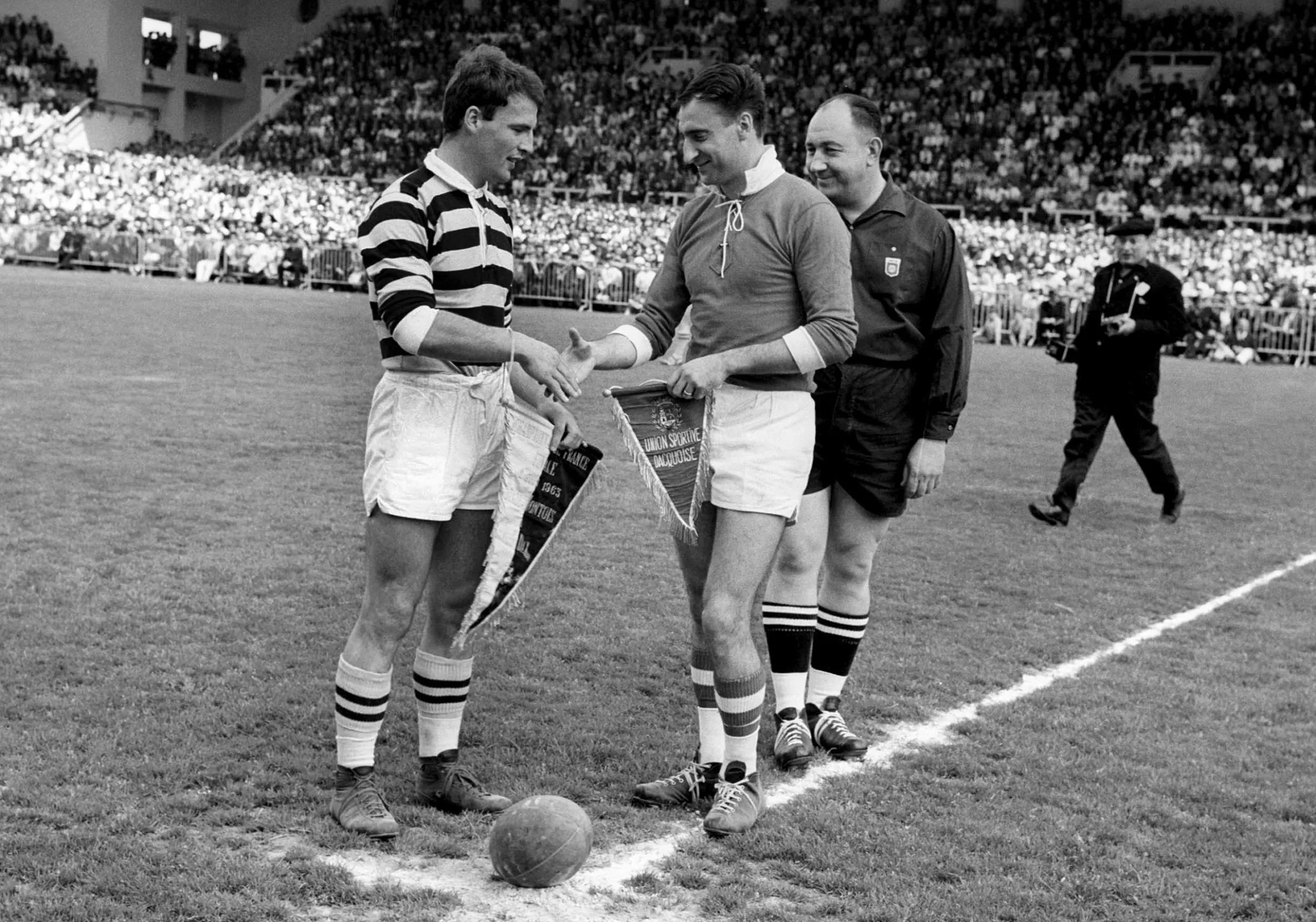
Family was important at the end of 1963. Mont-de-Marsan was home to the Boniface brothers, André and Guy, whose stadium is jointly named. Dax was with Albaladejos, Pierre and Raymond. Fifteen months later, Raymond died in a car accident together with his colleagues Émile Carrère and Jean Othats, in whose honor the Chapelle Notre Dame du Rugby in Larrivière-Saint-Savin, where this column was honored four years ago.
If those three hadn’t died, Claude Dourthe wouldn’t have risen to the first team so quickly, or made his France debut at the age of 18. Along with Jean-Pierre Bastiat, Jean-Patrick Lescarboura and Jean-Pierre Lux, Dourthe – known as “The Camel” – brought star power to Dax, but not Bouclier. “Most of us have won everything [else]even a big attack, and that is still my biggest regret, for the city more than for me,” Bastiat said in 2007.
It did little to diminish the wonder of this three-letter city. Peter Bills wrote: “On the western side of the Pyrenees, Dax, there is a curious village, a little pocket of rugby . . .” Jean-Pierre Rives: Modern Corinthian. “Claude Dourthe shares his dental practice with Jean-Pierre Lux, his international rugby coach in the late 1960s, until the mid-1970s. Down in the same building, Jean-Pierre Bastiat runs an insurance company.
The last time they were close – and it may be as close as Dax has ever come – was in 1996, when they lost to Toulouse in the semi-final. Again, it was sheer power that put a stop to the fairytale, as Toulouse were on their way to a third of four in a row. In those ten years, Dax had Richard Dourthe (son of Claude), Raphaël Ibañez (son of Jacques, another urban legend), Thierry Lacroix, Olivier Magne, Fabien Pelous, Laurent Rodriguez and Olivier Roumat. Before long they were elsewhere, and barring a flirtation with the basement of the Top 14 from 2007 to 2009, Dax has been outside the elite ranks.
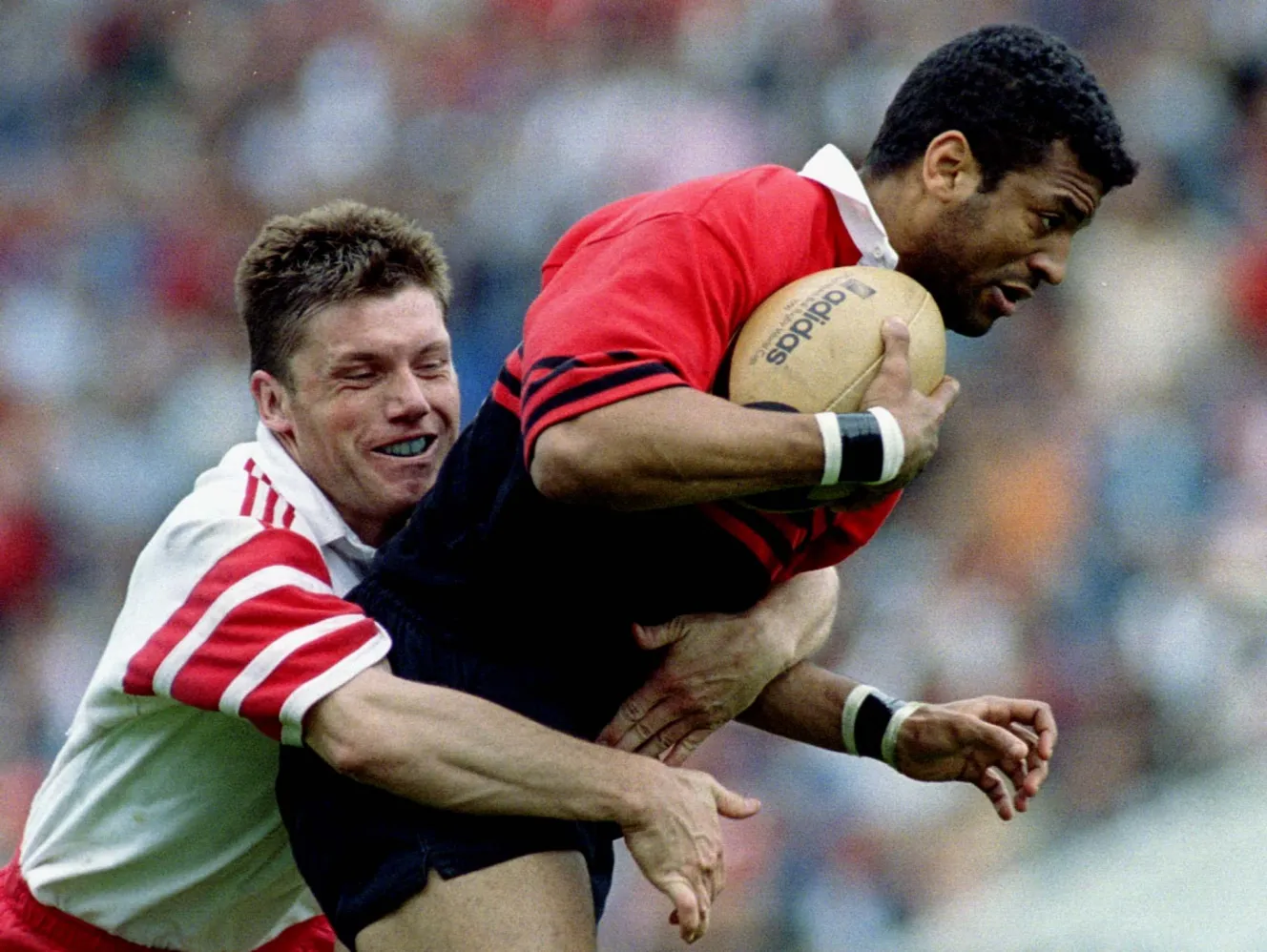
The fraternal element was even stronger in the 90s. In the chapter on the family style of French rugby in his book Rugby: 1,001 photosMatthieu Le Chevallier highlighted Dax: “In the mid-1990s, the Dourthe home was a gathering place for Dax’s young rugby players. Among them, Olivier Magne and Raphaël Ibañez took advantage of their proximity to attract Claude’s daughters, whose sons-in-law would become their sons-in-law, and therefore, three of Richard’s friends. Cup finals of the World in 1999.”
Names of that level are playing elsewhere now. Few know what it means to be Dacquois, but many will recognize that attitude of Poulidor. Colin Montgomerie at golf, or Jimmy White at the Crucible. Football clubs such as Blackpool, Cardiff City, Watford and Southampton remember seasons when they were the second best team in the country. This year Warrington Wolves will try to win the Super League and the Somerset County Championship. In France, La Rochelle and Bordeaux Bègles are keen on Bouclier, having lost four of their last five finals to Toulouse.
As Poulidor pointed out, there can be glory, even in vain. Sometimes I wonder: if I win two or three Tours de France, would I be so popular? Poulidor told La Montagne in 2015. “I don’t think so. There is a political Poulidor, an academic Poulidor, a Poulidor in every sports lesson. I saw Anquetil a few days before he died. He told me, almost with a smile, that I would finish both again.”
#day #Dax #French #heavyweights #languishing #place