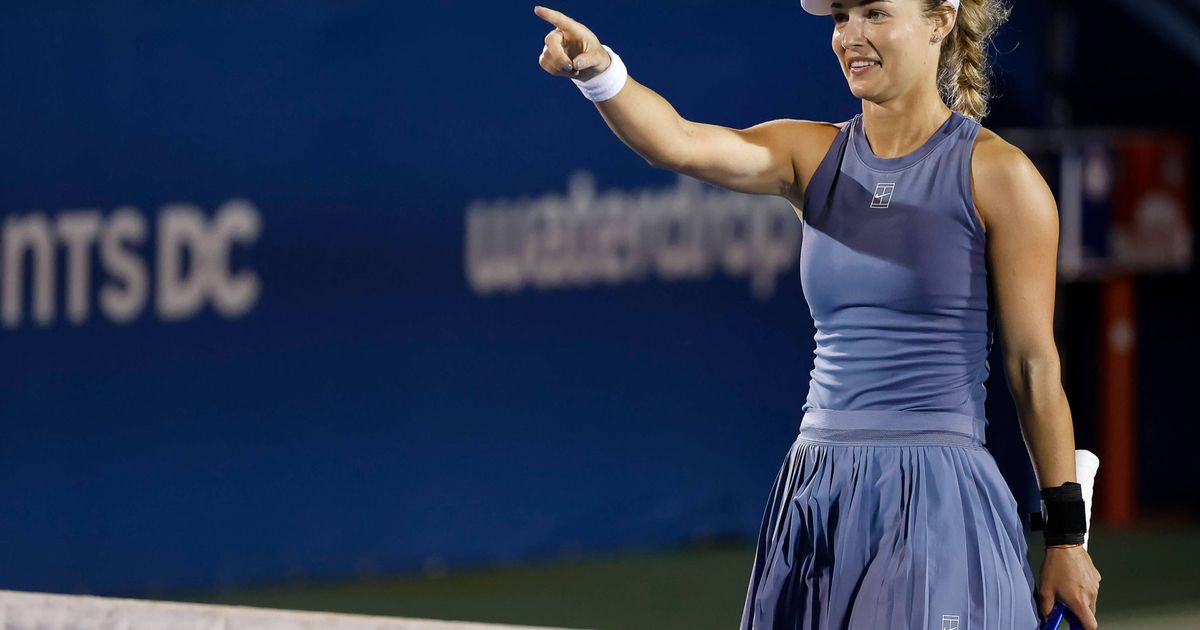
Despite her rise in the rankings, Kalinskaya has yet to win a single WTA title, and her results are based on deep runs rather than dominant victories. This trend has reached 2026, where he is still a dangerous opponent throughout the ruins but still wants to change the deal to silver.
His conversion to clay comes with some caveats. Unlike hard courts, where his aggressive base game is most effective, clay has required adjustments in patience and shot selection—areas he’s adopted are still evolving.
Kalinskaya’s opening performance demonstrated that balance. While he is able to control with his back and force his opponent to move, he also emphasizes the need to change his natural game based on strength in long meetings and the high levels that are common on clay courts.
“Situation-ship” with clay reflects continuous adaptation
Kalinskaya gave a candid assessment of her relationship with clay, describing it as a “status vessel” rather than a place she feels completely comfortable with. The comments suggest gradual improvements and progressive failures as he continues to adapt to his game.
His explanation points to the structural challenges for aggressive clay players, where point-building and endurance often outpace first-round tennis. Kalinskaya admitted the need to limit her instincts to hit opponents, especially in slow conditions. You have to be very patient. You can’t hit every ball as hard on a hard court. So that’s the problem.”
That change is still important to his growth at the top. Although more and more progress has been evident, including improved comfort in extended sessions, clay continues to expose areas in his game compared to his games on fast courts.
Recent stability and training ensure consistency
Kalinskaya pointed to her back as the key to her first win, using it to build points and finish rallies. Tunya has become a reliable anchor in his game, especially when he manages transitions between zones. I was happy with my back hand.
That long-term partnership has provided a stable development framework, allowing for incremental improvements rather than sudden changes. Kalinskaya emphasized the balance between professionalism and personal connection as a defining feature of the relationship.
“We enjoy being on the court, working together, and sharing moments outside the court. It’s important to maintain balance – to stay professional when you have to work. I think we’re doing well.”
His approach to the clay boat shows balance – measured expectations, adaptability, and focus on the surface rather than external factors such as conditions or difficulty of pulling. “When I’m on the court, I don’t think about who’s on top, but only one ball at a time. I have to focus on myself.”
#state #boat #Anna #Kalinskaya #opens #clay #season #limited #expectations #Charleston