When I read the start list for the Volta a Catalunya 2026 I was quite impressed. Everyone who fancies themselves a strong GC racer was there. Everyone except Tadej Pogačar, who enjoyed a separate Classics program because he felt he saw an opportunity to fill a few holes in his illustrious palmarè. We won’t see him in a stage race until the Tour of Romandie at the end of April.
Apart from the top rider in the world, all the leaders of the big teams lined up for the chance to find out where they were in the elite group and, importantly, what the riders who will compete against them in the Grand Tours looked like.
There were signs of form during the Paris-Nice and Tirreno-Adriatico but this Catalunya was one of the few events where all the GC racing players were present. Jonas Vingegaard set the standards and, as the only one close to competing with Pogačar, he was the favourite. However, the number of boys with something to prove was very large.
The article continues below
Remco Evenepoel needed to regain the form that saw him crush everyone in January and February. João Almeida had to cement his place as UAE Team Emirates-XRG’s active choice after a mixed first campaign, and Tom Pidcock was hoping to continue his good results and continue that form in the hilly Classics.
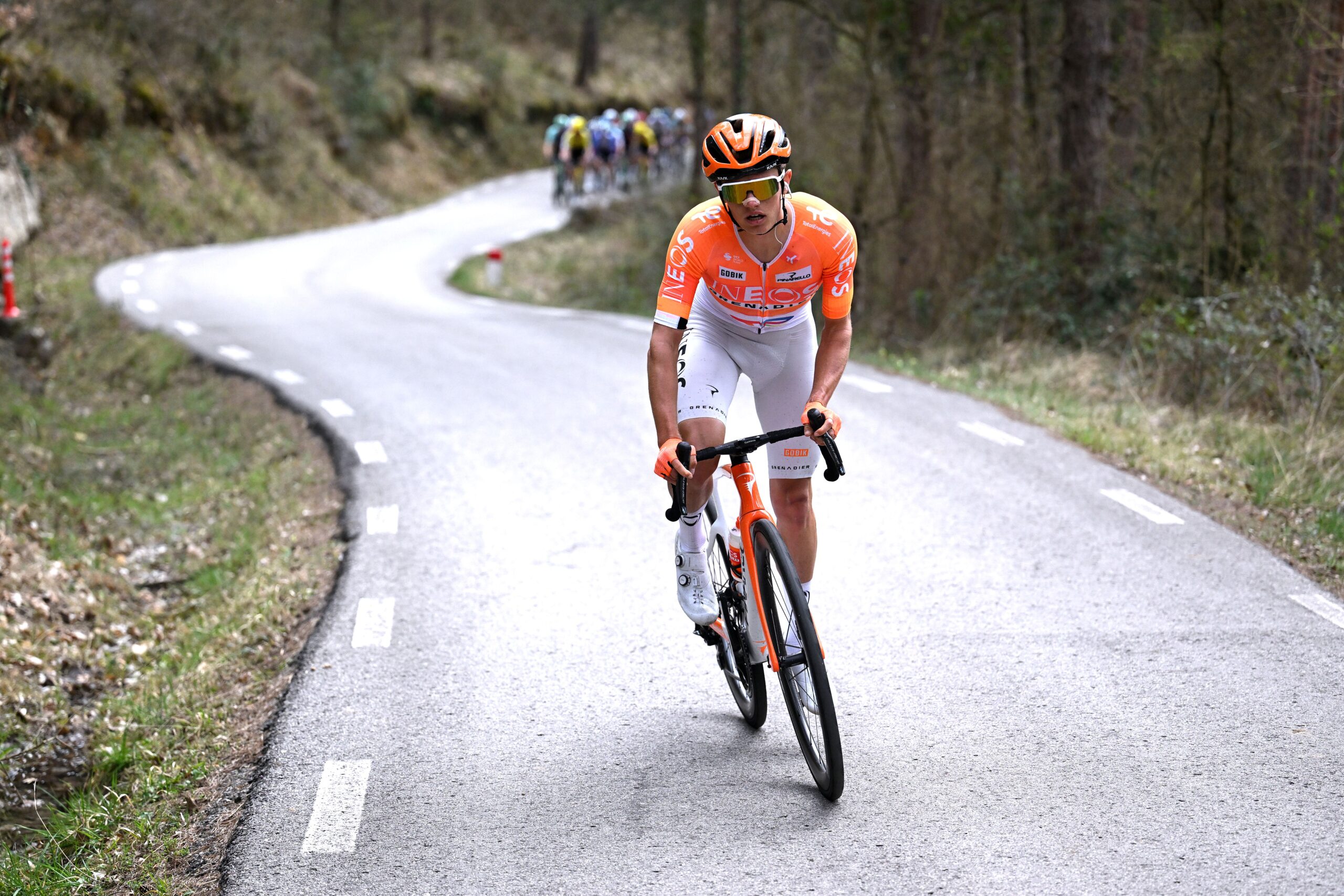
For riders who had changed teams, like Oscar Onley, this was a defining moment, a time to step up after the disappointment of Paris-Nice and build confidence. Up against Lenny Martinez, Florian Lipowitz, Ben O’Connor, Felix Gall, David Gaudu, Jai Hindley, and even his teammate Carlos Rodriguez, the Ineos Grenadiers leader had to be at the forefront of the race and convince. No pressure then.
Ineos falls to the ground, Evenepoel with his mind in the Ardennes
At least Ineos started with a bang, thanks to new signing Dorian Godon, the French champion who proved that in a tough race after an equally tough day he is one of the fastest. Doing the same again two days later while wearing the leader’s jersey proved that he was a valuable asset: a sprinter who could survive the middle stages of the mountains. The final victory of the teams was well deserved.
However, the Ineos GC race never happened. They tried to dominate the mountain tops but Onley and Rodriguez couldn’t challenge when things started between the best riders, and that has to be the point.
Not being able to go with Vingegaard in attack is understandable but one of them should have been in the chase immediately. The Scot was better on the last stage at Montjuic Parc, so the strength is there, his true climbing legs were missing on the longer stages.
Remco Evenepoel found himself in a similar position but was able to manage the result well, although it wasn’t quite what everyone expected – not as bad as last month’s UAE Tour, but not the performance either manager would have hoped for.
Looking at how he ran in the days leading up to the mountain stages, I can’t help but think that this was more of a test of how he would be in the upcoming Ardennes race than a test against Jonas Vingegaard. In that sense, Catalunya would be judged as a success since he was active, strong, and present in the early days, but he chased without running in the high mountains.
Red Bull had the strongest team for the position, but they were counting on Lipowitz to finish things off while Remco was the early leader of the race. I doubt that the team managers were completely happy, but in general when it came to the most important moments with the most riders – they had no one to compete with Vingegaard.
Martinez and Paret-Peintre are impressive
However, Lenny Martinez has shown that he is close to matching Jonas Vingegaard on the way up. We saw it in Paris-Nice and here in Catalunya the Frenchman produced the same performances, the same as Lipowitz, who we don’t forget was on the stage of the Tour de France last year.
I think it’s safe to say that Martinez’s campaign is going well and it wouldn’t be a surprise to see him in the front row of the one-day mountain races in April. His next big GC moment is the Tour de Romandie, where he’ll be racing against Pogačar, and while that may be another top finish, it should be interesting. Bahrain Victorious must be enjoying his progress and development. In terms of position and presence, Martinez is doing the right things.
It can be said that Felix Gall stood as the leader of the CMA CGM Decathlon and in the first test of the mountains was the best of the others after Vingegaard. That performance took him to second place on GC, but the next day he missed Red Bull’s attack on the first descent and paid the price of two minutes lost, which cost him a place on the podium.
However, the Austrian character was not in doubt as, together with Martinez and Lipowitz, they had tried to anticipate Vingegaard’s inevitable attacks. In the end, his position let him down, which is a shame as the Decathlon was strong overall and Matthew Riccitello was also in the GC group. A review of the first few rounds shows that Gall did not finish close to his opponents, something he will have to improve on.

It would have been interesting to see how well Tom Pidcock did on the bigger mountains, as, until his fall and abandonment, he was very good. Considering that he had ridden almost 300km from Milan-San Remo and came directly to Catalunya there was no visible level of fatigue on display. The question of whether he would have climbed with Vingegaard and co remains unanswered, but when he starts this season, there is no reason to believe that he would not be far ahead.
Valentin Pâret-Peintre’s case is an interesting one, behind Lipowitz and ahead of Evenepoel in the key GC days. He benefited from having a team mate after Red Bull attacked on the last stage of 6 but he always looked at his full potential as he climbed with the best boys.
In terms of speed uphill, he has a small climb speed, but that comes with a limit in that when he lands his speed drops again. His 4th place was probably more than what Soudal-QuickStep expected and a sign of his tenacity. If or when he gets another core strength he could be competing against his nemesis Lenny Martinez.
MIA passengers and Vingegaard’s controlled altitude
The list of ‘absent in action’, when they carried the hopes and prayers of their teams, is very long and nowhere are the players involved expected to be. Briefly we saw Mikel Landa try to look back on the glory of the past but he and Ben O’Connor burst the GC race too soon for comfort. The same can be said for Cian Uijtdebroeks, David Gaudu, who seems to have left the GC pretense, and Enric Mas.
At least Lidl-Trek had Giulio Ciccone win the mountain group with Mattias Skejlmose in front of the best guys. Movistar and Groupama-FDJ United were mostly ineffective. Things are progressing for them and not in a good way.

Unlike Jonas Vingegaard. Two stage races, two GC wins and many demonstrations of climbing ability so far in 2026, matched only by Tadej Pogačar. This victory was not as impressive as his Paris-Nice victory; it was very controlled and medical.
He did enough to move his opponents when he saw it was time to strike and with that came the confidence that he could handle any situation he felt. The combined power of Red Bull tested his Visma-Lease Cycling team but Vingegaard was head and shoulders above everyone else when it came to the key moments. Cleverly he always seemed in control, as you would expect from a Grand Tour winner, never in the wrong place at the wrong time.
The 105th Volta de Catalunya asked the question before it started: ‘is there anyone who can stay with Jonas Vingegaard?’ The answer when the race ended in Barcelona was a surprising ‘no’.
#Medical #expert #Jonas #Vingegaard #long #list #riders #MIA #Philippa #York #reviews #Volta #Catalunya